
Premium, very bright finish. The process requires low currents that are extremely accurate and stable.
Micronics Systems designs rectifiers suited to this process: controlled voltage, reliable current and sustained performance, even on the most demanding lines.
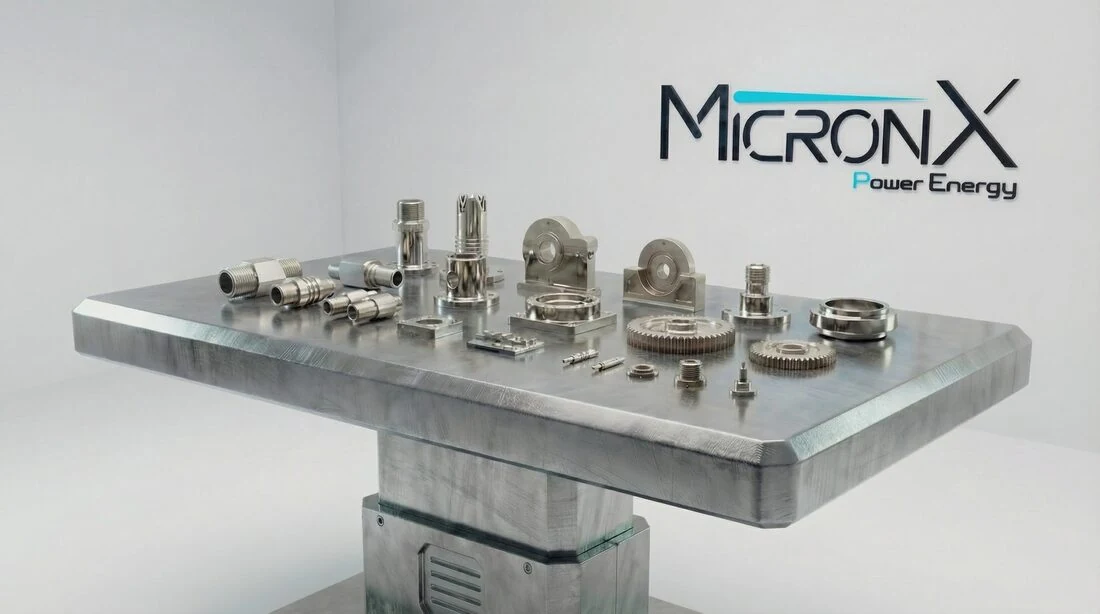
Rhodium plating is an electrolytic deposit of rhodium, a precious metal of the platinum family. It gives a white, very bright and durable finish — brilliant and tarnish-resistant at the same time: the premium finish par excellence.
It is used above all in jewellery and fine jewellery : it enhances white gold and protects silver from tarnishing. The deposit is extremely thin (a fraction of a micron is enough), which makes the process all the more delicate — and since rhodium is a rare and expensive metal, every setting counts.
Rhodium plating is carried out at low current, but with maximum precision required: on such a thin layer, the slightest variation shows up as a surface defect or as excess consumption of precious material.
Meticulous cleaning of the part for a perfectly clean deposit.
A low, finely metered current deposits a very thin layer of rhodium.
Careful rinsing to preserve the shine and recover the precious material.
Checking the brightness and uniformity of the finish.
There is no rhodium deposit at all without direct current: the comparison is about the quality of that current, between a supply that fluctuates and a regulated rectifier.
Rhodium plating is the opposite of chrome plating: no high power here, but extreme precision at low current. On such a thin layer and such an expensive metal, an unstable current spoils the appearance and wastes precious material.
Micronics rectifiers provide very fine regulation at low currents, for a perfectly controlled and reproducible deposit. The result: consistent brightness, a premium finish and optimised rhodium consumption — a major economic issue with such a rare metal.
Our experts support you from study through to commissioning.